Text so far
The best pet is a
Local AI / Systematic Research / Software / Public Notebook
A public research notebook built from the hardware up: running models locally, testing trading ideas against data, and building the software the work needs.
What I work on
Local AI is the deepest area right now; the research and software around it stay public alongside it.
Hardware, quantization, runtimes, benchmarks, and interactive explanations for local inference.
Explore local ai →ResearchReproducible experiments on market regimes, filters, and execution — including the ideas that fail against data.
Explore research →SoftwareLocal-first projects for data, measurement, and research workflows.
Explore software →Local AI
Hardware, models, runtimes, and benchmarks for running AI locally — with a learning hub for going deeper.
Learning paths for fundamentals, hardware, models, and software, with interactive explainers for tokenization, attention, and the KV cache.
The featured guides below cover the decisions that matter most: choosing hardware, understanding quantization, and what a 3090-class build can actually run.
Interactive explainer
Step through the small loop a language model repeats while generating text.
The best pet is a
The tokenizer splits text and gives every token a numeric ID.
[0.2, −0.7, …]Embeddings represent meaning. Attention mixes in useful context from the other tokens.
The best pet is a dog
Then the same loop starts again.
Featured Local AI guides
Selected hardware, fundamentals, benchmark, and model-analysis work rather than a chronological feed.
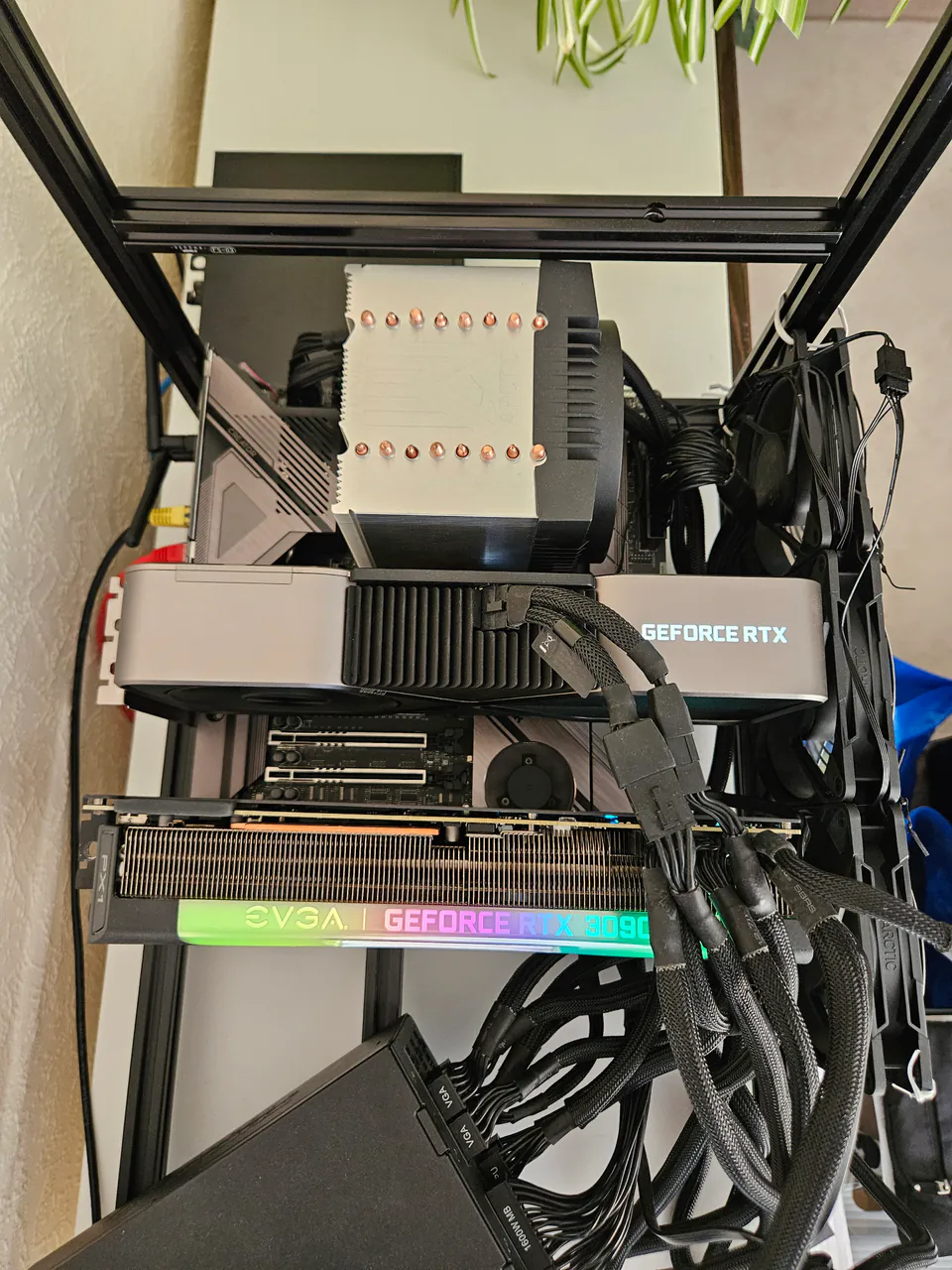
A dual RTX 3090 local AI workstation with 48 GB of distributed VRAM, Threadripper Pro, WRX80, 128 GB ECC RAM and enough expansion room for larger multi-GPU experiments.
Read the guide →Buying guideA comparison of GPUs, workstation cards, unified-memory devices, and CPU inference setups for local AI, focused on price, speed, memory capacity, software support, and practical tradeoffs.
Read the guide →FundamentalsA beginner's guide to local LLM quantization: what bits per weight means, how popular GGUF formats compare, when to choose Q2 through Q8, and why Q4 is a strong starting point.
Read the guide →BenchmarkA practical look at the RTX 3090 for local AI workloads, covering specs, VRAM, bandwidth, TFLOPS, used pricing, power limiting, LLM performance, image generation, and why it remains one of the best-value GPUs for running open models at home.
Read the guide →Recent work
The latest from every area — Local AI, research, and software.
A dual RTX 3090 local AI workstation with 48 GB of distributed VRAM, Threadripper Pro, WRX80, 128 GB ECC RAM and enough expansion room for larger multi-GPU experiments.
I weakened refusal in Qwen3.5-9B and found that most of the change came from one simple update in layer 15.
A step-by-step guide to using Tailscale and SSH for private remote access to a home local AI server, with Ollama and Open WebUI examples.
A beginner's guide to splitting a local LLM between GPU VRAM and system RAM, with practical llama.cpp settings and advice for dense and mixture-of-experts models.
Elsewhere in the notebook
Quant research, software projects, and technical writing each have their own section.
Methodology, testing, failures, and iteration on systematic strategies.
Browse quant research →Software projectsProjects spanning quantitative research, automation, data engineering, and personal interests.
Browse software projects →Essays and notesLong-form writing wherever curiosity leads: technology, markets, AI, and decision-making.
Browse essays and notes →